IS THIS REALLY AN OFFER?
Price history per product: see whether an offer is really an offer
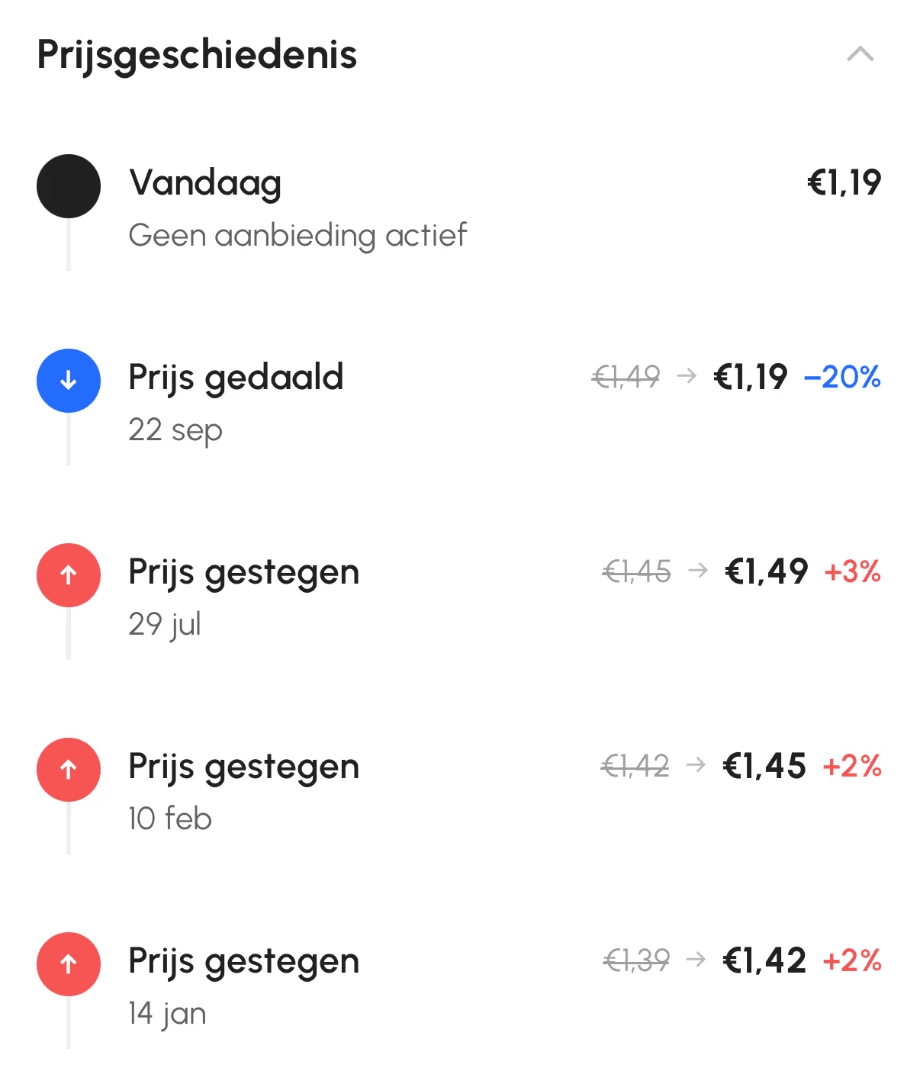
A deal is only an offer if the price is really lower than in the weeks before. Mandje shows a timeline of the price for each product: when it went down or up, by what percentage, and what the lowest regular price is, based on more than 1,510,000 price points fetched again every night. One look is enough to tell a real discount from an inflated "was" price.


HOW IT WORKS
In three steps
- 1
Find the product
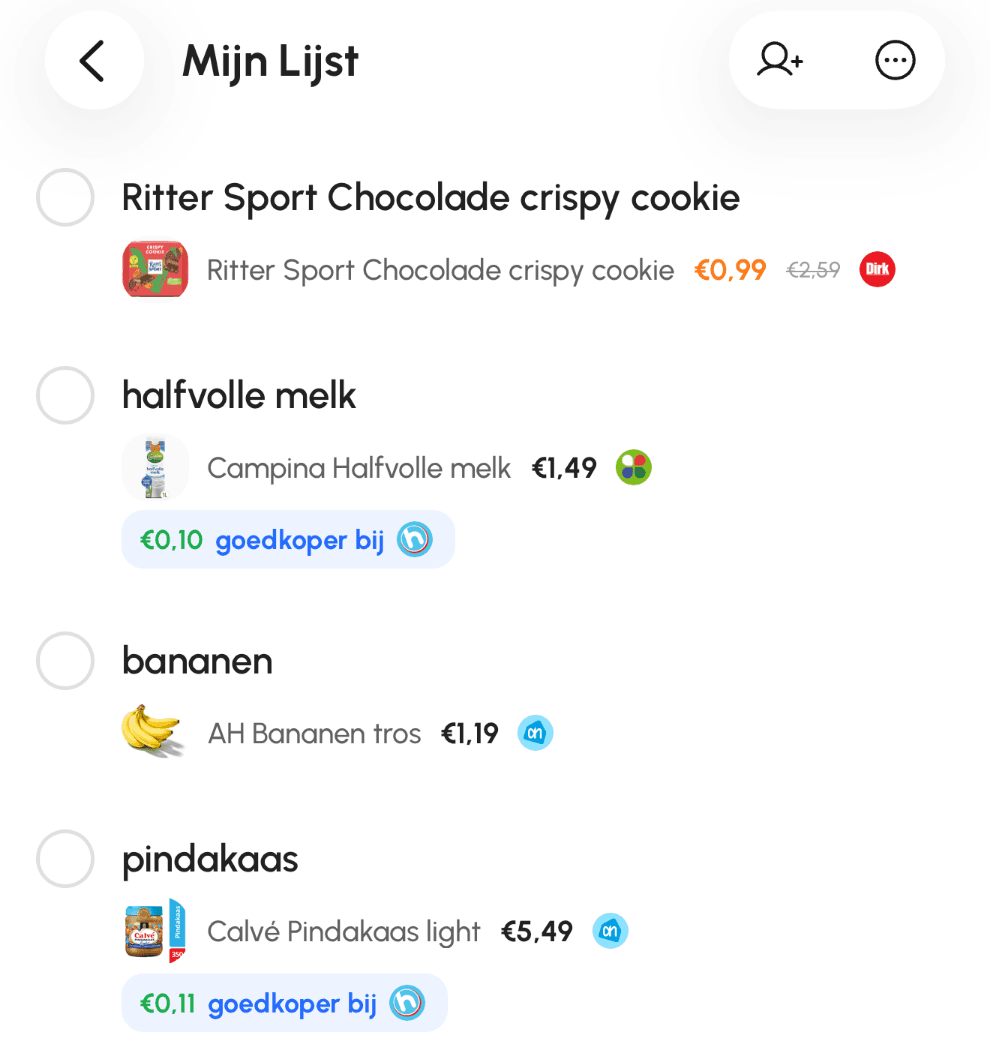
Type the name or scan the shelf. You see the price at every supermarket side by side, with the price per kilo or litre.
- 2
Open the price history
Under the price sits the timeline: every price drop and rise with its date, and the lowest regular price.
- 3
Decide with proof
If the deal price is below the lowest regular price, it is a real offer. If the price went up just before the deal, the timeline shows it.
WHY MANDJE
Why this works better in Mandje
Mandje tracks more than 1,510,000 price points across 10 supermarkets and more than 190,000 products.
The timeline sits on every product, offers or not, so on your regular groceries too.
The data comes fresh from the stores every night, not from last week's flyer.
MORE FEATURES
Also in Mandje
The same app, the same data from last night.
FAQ
Frequently asked questions
Answers to what people ask us most.
Back to the day Mandje started following the product. The timeline shows every price change since then: the date, the old and the new price, the percentage and the lowest regular price. Mandje fetches the prices of 10 supermarkets, from Albert Heijn to Ekoplaza, again every night and had collected more than 1,510,000 price points by 4 November. The longer Mandje follows a product, the longer the timeline.
Ready to shop smarter for groceries?
Download Mandje for free and never miss an offer. Works on iOS and Android.
18,000+
People in the Netherlands
are already using Mandje
Average rating of 4.3 ★