 Ayoub Ez-ZaouiaCo-founder and developer of Mandje·15 May 2026·7 min read·updated 12 September 2026
Saving on groceries: 15 practical tips for 2026
Groceries get more expensive every year. Between January 2022 and December 2025, food prices in the Netherlands rose by almost 28%, and by more than 33% since the start of 2021 (Statistics Netherlands, consumer price index). At the same time, many people continue to stick to the same supermarket, the same brands, and the same habits, even though there are opportunities to save everywhere.
In this article, we share 15 practical tips you can apply right away. No vague advice, no complicated spreadsheets. Just concrete steps that work.
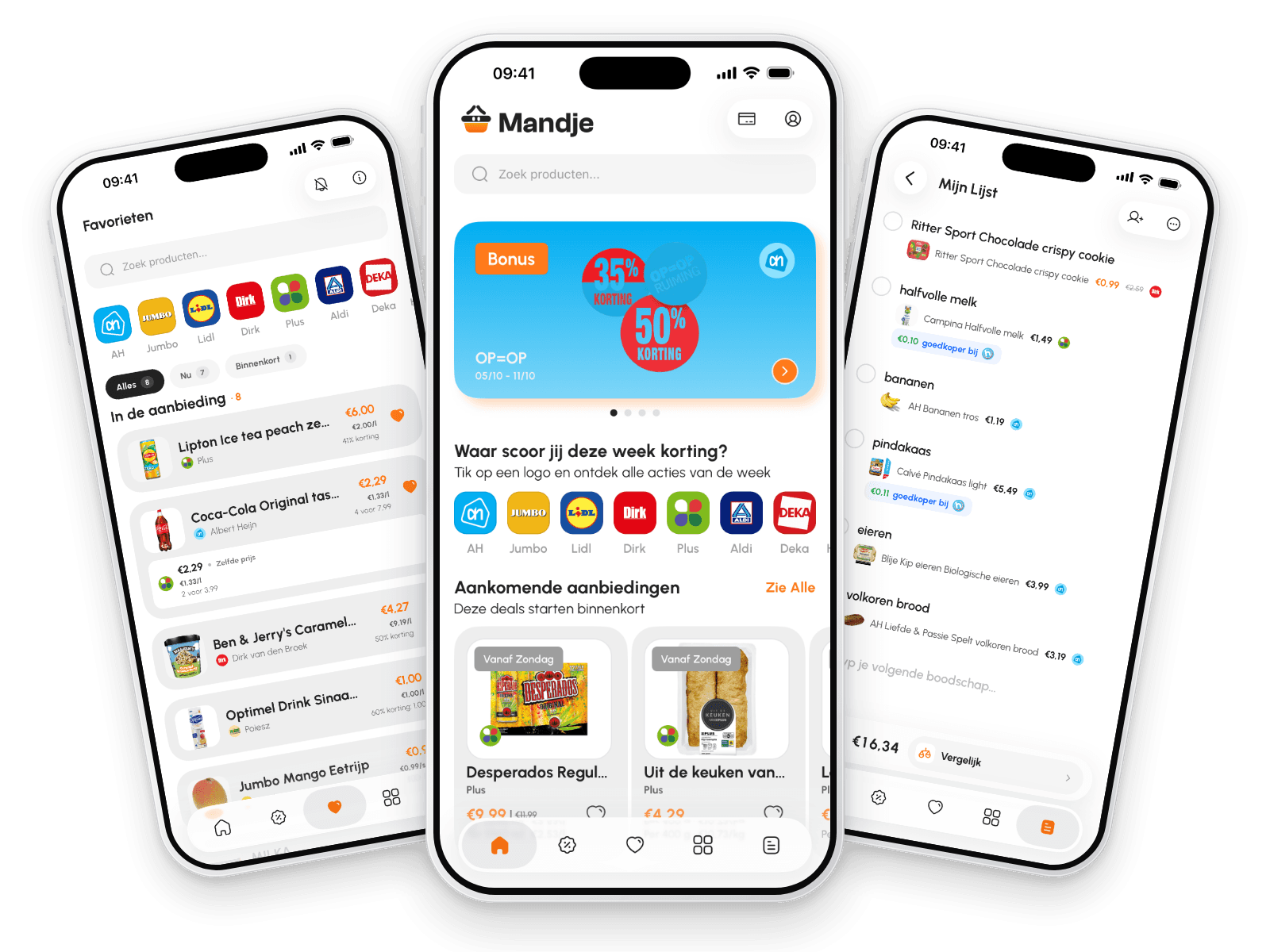
The fastest way to apply most of these tips is Mandje: the free app that compares your shopping list at 10 Dutch supermarkets, works out the price per kilo, shows the price history and alerts you when a favourite goes on offer. Where the app does the work for you, the tip says so.
Plan before you go to the store
The biggest savings don't happen in the store itself, but in what you do before you leave.
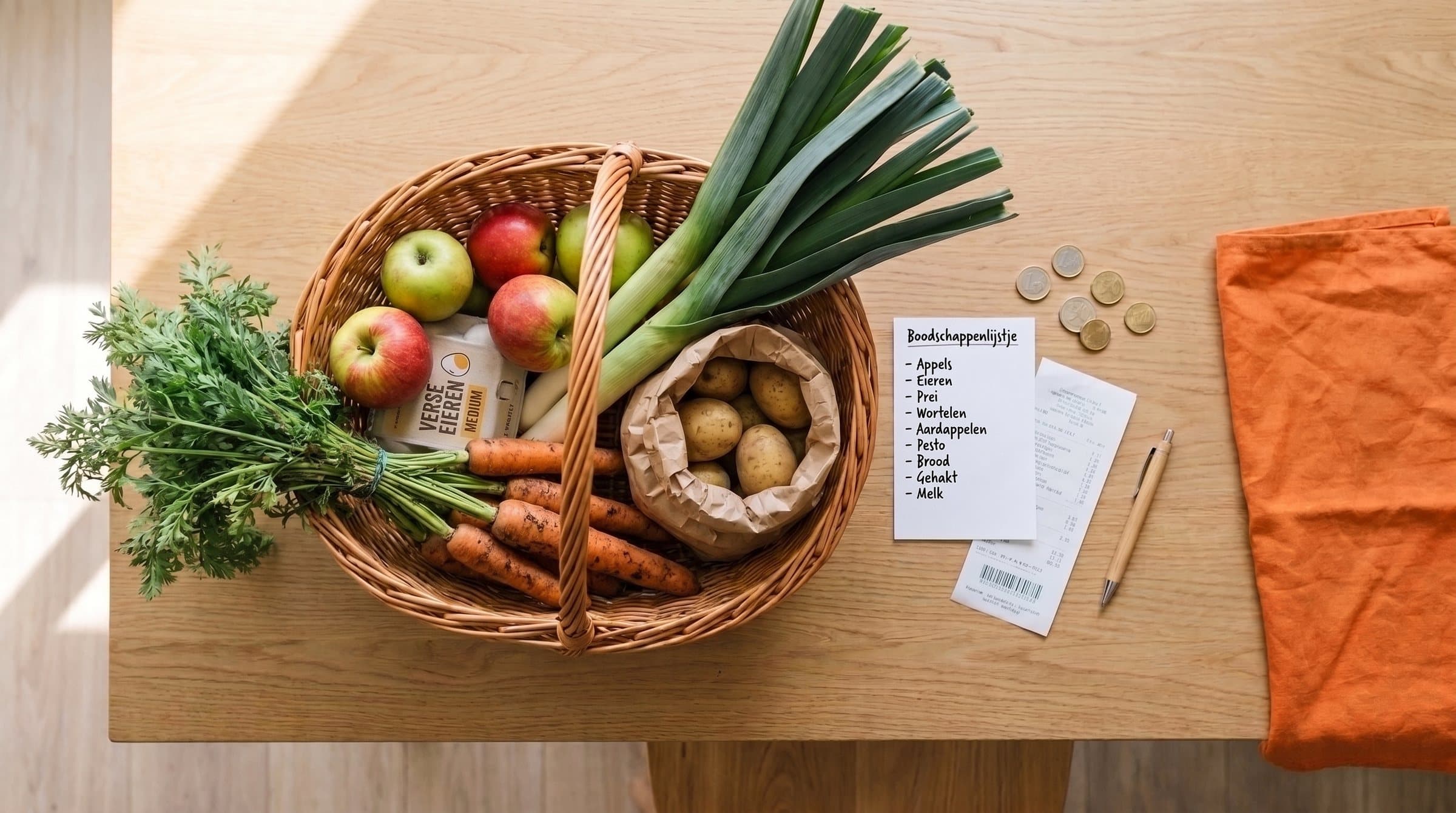
1. Always make a shopping list
Nibud, the Dutch budget institute, puts it at the top of its saving tips: plan the week, shop at a fixed moment and bring a list you stick to. A list keeps you focused, stops you buying what you already have, and protects you from the impulse buys a supermarket is designed for.
In Mandje: Your list in Mandje is shared with your household and priced instantly: at which of the 10 supermarkets is this whole list cheapest?
2. Check your cupboards and fridge first
Before you make a list, see what you already have. Nothing is more wasteful than having three boxes of pasta in the cupboard and buying a fourth because you forgot.
3. Plan your meals for the week
By planning ahead, you know exactly what you need. No more random impulse purchases for a single dish. How much it saves depends on your household: Nibud budgets about 495 euros a month of food for a couple and over 740 euros for a family with two children (July 2026). Every 10% you waste less or buy less on impulse is 50 to 75 euros a month at those amounts.
4. Check the deals before you leave
The leaflets of the 10 chains start on different days of the week, so if you only know your own supermarket's leaflet you miss the offers at the rest. With Mandje, you can see all weekly deals from 10 supermarkets in one app, before you walk out the door.
In Mandje: All offers from 10 supermarkets are in the app every morning, sorted by category or by store.
Smart shopping in the supermarket
Once you're in the store, there are also plenty of ways to save money.
5. Always compare the price per kilo or liter
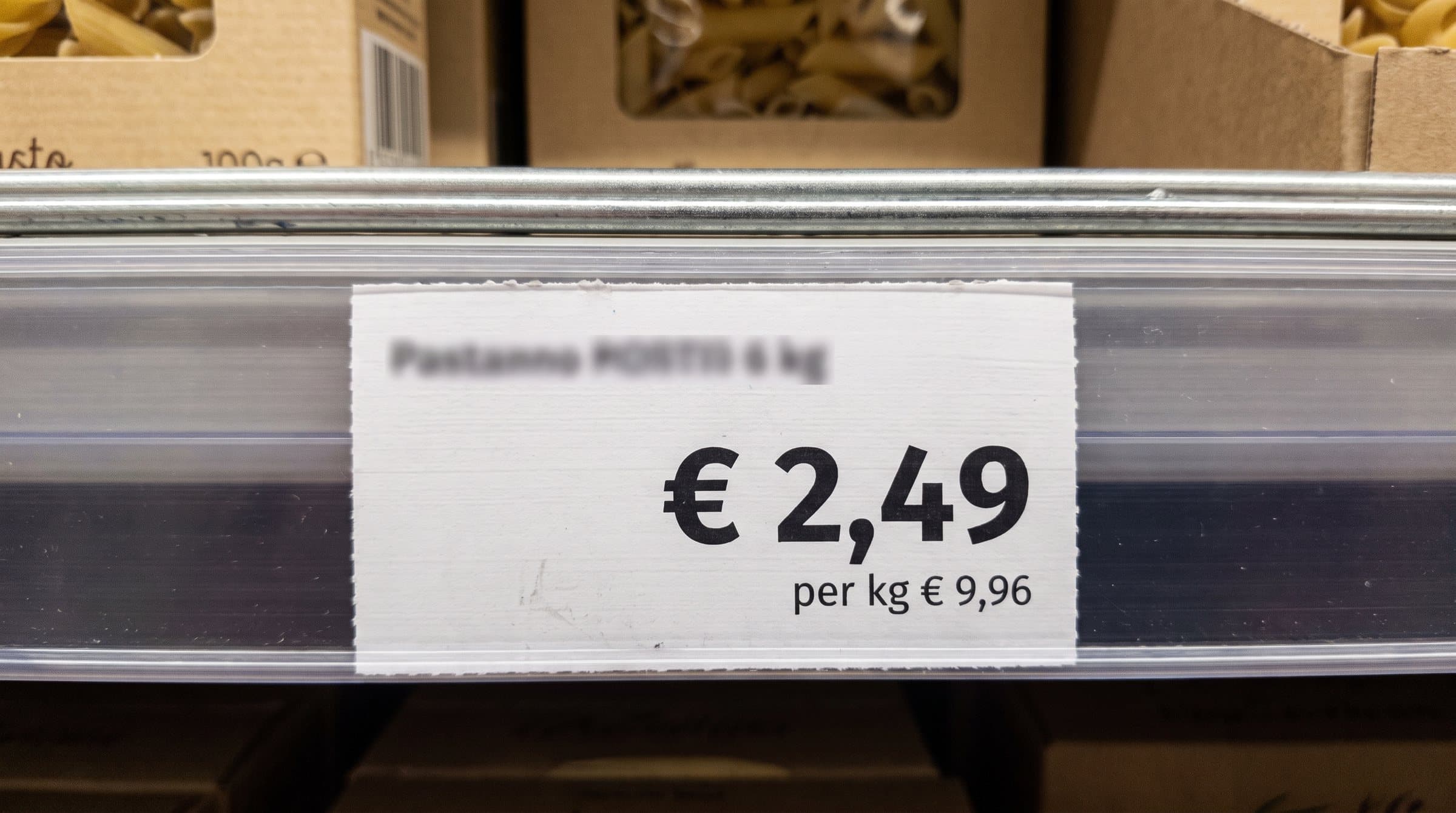
A small tin of tomatoes might seem cheaper than a large one, until you look at the price per kilo. Many supermarkets place small packages prominently because the profit margin is higher. Always look at the bottom of the price tag for the price per kilo or liter.
In Mandje: Mandje shows the price per kilo, litre or piece for every product, and compares it across brands and chains.
6. Don't go grocery shopping hungry
A classic, and a fair one: hungry, you reach faster for extras and for high-calorie products. The percentage often quoted for this comes from a study that was later retracted, so we do not give a hard number. Eat something before you go; it costs nothing and it works.
7. Avoid eye level
Supermarkets place the most expensive brands at eye level and the cheapest options at the bottom or top shelves. Make a conscious effort to look at the lowest and highest shelves, you'll often find perfectly fine alternatives there for half the price.
8. Buy store brands when the quality is the same
For many basic products (sugar, flour, milk, basic vegetables), there is no difference between a store brand and a name brand. For other products, there is. Try it out and stick to the store brands you like just as much.
9. Watch out for the "weighing trick"
Pre-cut and pre-packed vegetables cost more than loose. The Dutch consumer programme Keuringsdienst van Waarde compared stir-fry mixes at Albert Heijn, Dirk and Jumbo in 2024 and found cutting your own cheaper in every case, by 40 cents to 2 euros per pack. For uncut produce the rule is the same: compare the price per kilo, because a 500-gram bag of mushrooms can cost more than 600 grams loose, and loose is often fresher too.
Using deals and promotions wisely
Deals only work in your favor if you use them smartly.
10. Not every "deal" is a real discount
Supermarkets regularly mark products as being on "deal" while the price remains identical to the regular price from a few weeks earlier. With price history, you can check if a promotion actually saves you money. Mandje tracks 1,460,000 price points over time.
In Mandje: Every product has a timeline with every price drop and rise. An inflated "was" price stands out immediately.
11. Stock up wisely on long-life products when they are discounted
Laundry detergent, canned food, pasta, and coffee last for months. If these are on sale with a discount of 30% or more, stock up. You'll pay the discounted price instead of the standard price for three months.
In Mandje: Mark your pantry staples as favourites and Mandje alerts you as soon as one of them goes on offer anywhere.
12. Shop at multiple supermarkets if you have the time
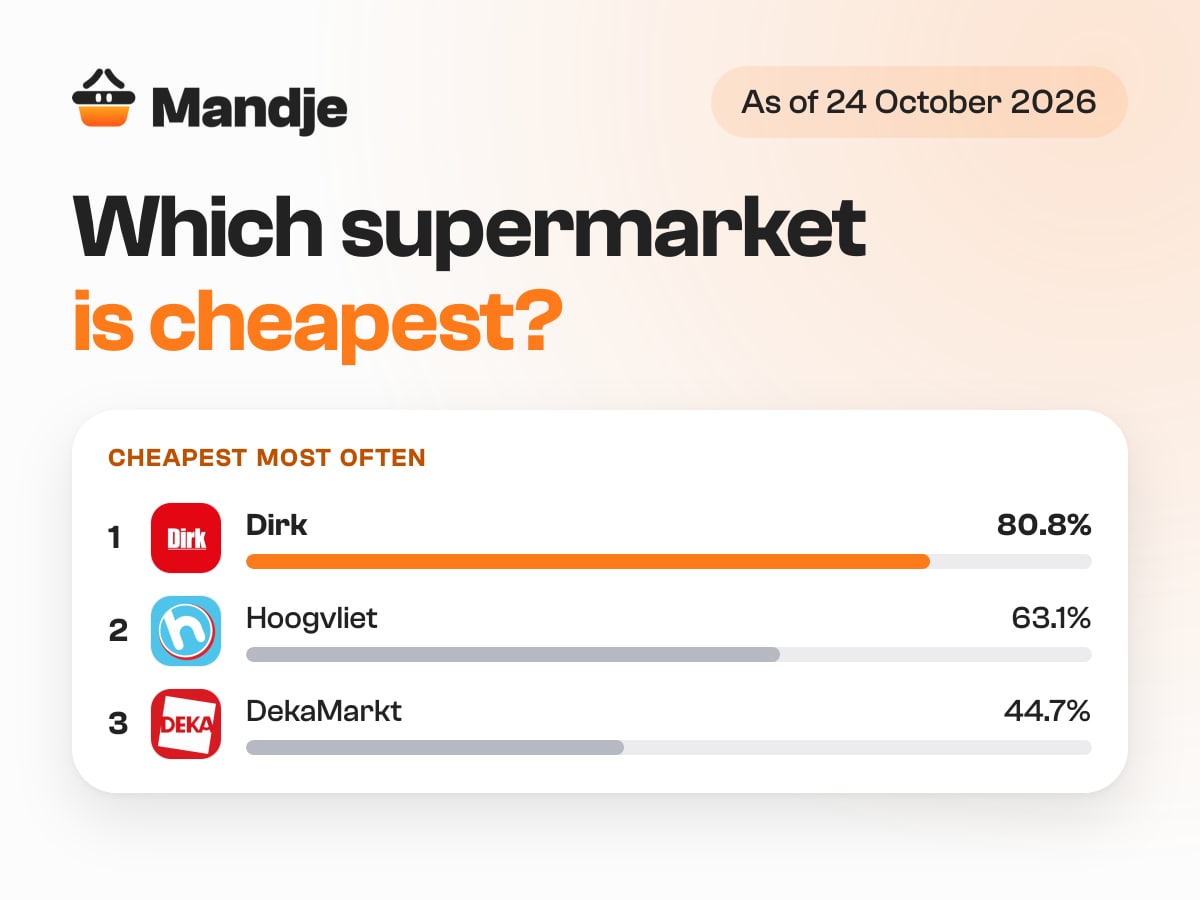
No single supermarket has the lowest price on everything. In the Consumentenbond price check of 6 May 2026 (131 budget items at 13 chains) the cheapest chains sit about 9% below the average price level and the most expensive up to 24% above it. In Mandje's data even the cheapest chain, Dirk, wins 80.8% of the price comparisons; for the rest another supermarket is cheaper. Do your staples at a cheap chain and pick up the offers at a second one, and you capture a good part of that gap.
In Mandje: Mandje shows what your list costs at each supermarket, so you see at once which two stores together save the most.
Manage your inventory
What you do at home also determines how much you actually need.
13. Prevent food waste
Dutch consumers throw away an average of 25.5 kilos of solid food per person per year at home, about 7% of what they buy; not wasting anything saves roughly 100 euros per person per year according to the Netherlands Nutrition Centre, so around 400 euros for a family of four. Bread, vegetables and fruit top the list. Store products in the right place, plan meals around ingredients that spoil quickly, and use leftovers for tomorrow's lunch.
14. Freeze what you don't use right away
Bread, meat, sauces, and even some vegetables freeze perfectly. Buy them on discount and freeze them right away, that way you'll still be eating at the promotional price weeks later.
15. Keep track of your pantry
A quick glance in your pantry prevents double purchases. Some people keep a list on the fridge, others use an app. Whichever you choose, it saves you both money and food waste.
In Mandje: Keep your regular groceries as favourites in Mandje and add them to this week's list with one tap.
Finally
Saving money on groceries isn't an art form, but a matter of discipline and a little preparation. Start with three or four of the tips above and gradually build from there.
The biggest impact often comes from the simplest things: a good list, knowing where the deals are, and not shopping on an empty stomach.
Want to make things even easier? Download Mandje for free: all deals from 10 supermarkets in one app, your whole list priced per store, price per kilo, price history and alerts for promotions on your favorite products.
Why savers in the Netherlands use Mandje
- 10
- supermarkets in one app
- 104,863
- products compared every night
- 1,460,000+
- price points of history
- 4.4 / 5
- from 83 reviews in the App Store and Google Play
Mandje is free and works on iPhone and Android. Put your groceries on one list and see at which of 10 supermarkets the whole list is cheapest this week, with price per kilo, price history and an alert when a favourite goes on offer.
"Surprising"
"I've only been using the app for a day and already noticed several products I regularly buy on sale at another store. The discounts are clear, relevant, and really practical. No useless extras, just benefits you can use right away."
Louihrani10, App Store
"Handy tool"
"I usually check multiple supermarket apps for deals, but with Mandje that's a thing of the past. Fresh and clear."
Chris261272, App Store
Great concept
"Really great app! My girlfriend and I were looking for a shared grocery list, and it's so nice that this app also instantly compares different stores."
Maartentromp, App Store
Named App of the Month (May 2026) by iCulture, the Dutch Apple site, and rated 5/5 by ID.nl (October 2026).


Frequently asked questions
How much can you save on groceries?
It depends on where you start. The biggest steps in this article: shop with a list (tip 1), compare the price per kilo instead of the pack (tip 5), only take an offer when the price history shows it is a real one (tip 10), and split your weekly shop over two supermarkets (tip 12). Mandje does the last three for you.
Which supermarket is the cheapest in the Netherlands?
On 24 October 2026 it was Dirk, with the lowest price for 80.8% of the products that are also sold at other chains. No chain wins everything, though; which supermarket is cheapest for your list changes every week. The full ranking is on the supermarkets page.
How do I spot a fake discount?
Look at the price of the weeks before. An offer is only a discount if the price is really lower than usual; with an inflated "was" price you pay what you always paid. Mandje shows the price history per chain for every product, so you see it at a glance.
Which app helps you save on groceries?
Mandje: the free app that compares your shopping list at 10 Dutch supermarkets, shows the price per kilo and the price history for every product, and alerts you when a favourite goes on offer. On iPhone and Android.
Sources
- Statistics Netherlands (CBS), consumer price index 2015=100, food and non-alcoholic beverages, January 2021 to December 2025 (StatLine 83131NED)
- Nibud, practical saving tips (weekly plan, fixed shopping moment, list)
- Nibud, household expenses: food costs per household, July 2026
- Consumentenbond, supermarket price check, 6 May 2026
- KRO-NCRV Keuringsdienst van Waarde, are loose vegetables really cheaper than a stir-fry mix?, August 2024
- Netherlands Nutrition Centre (Voedingscentrum), food waste figures for 2025
First published 15 May 2026, updated 12 September 2026: the figures in the tips were checked against the sources above and corrected where needed; the numbers about Mandje come from its own data and refresh every night.